Workflow Optimization for Staffing Firm
Beech Valley Solutions | Lead Product Designer | Apr 2020 – Jun 2023
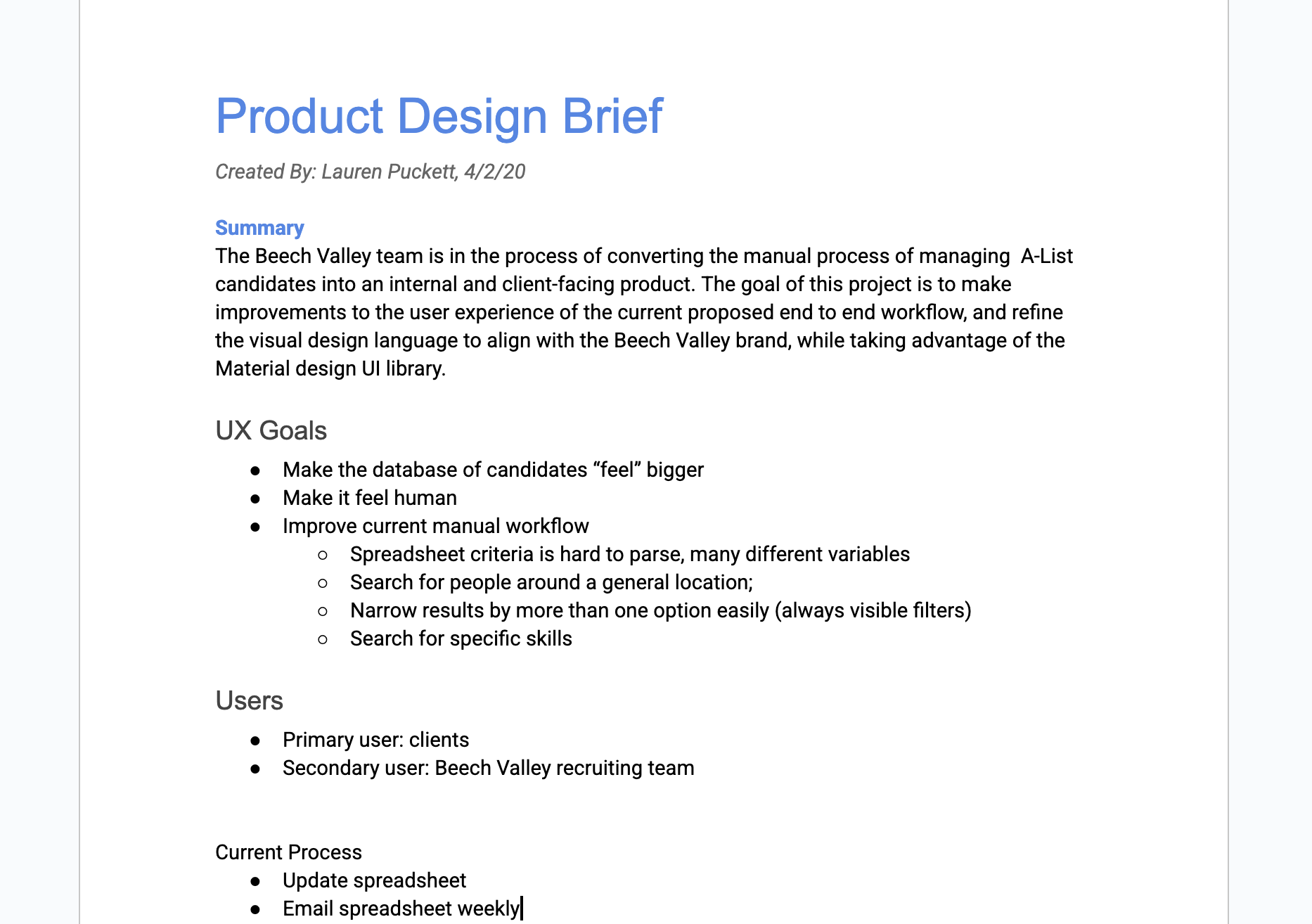
Transformed a small staffing firm’s manual, spreadsheet-heavy processes into a streamlined digital system. Led the end-to-end product lifecycle from workflow audits and bottleneck mapping to backlog refinement and custom tool delivery—reducing repetitive tasks, improving data accuracy, and empowering teams to focus on high-value client relationships.
1. Context & Challenge
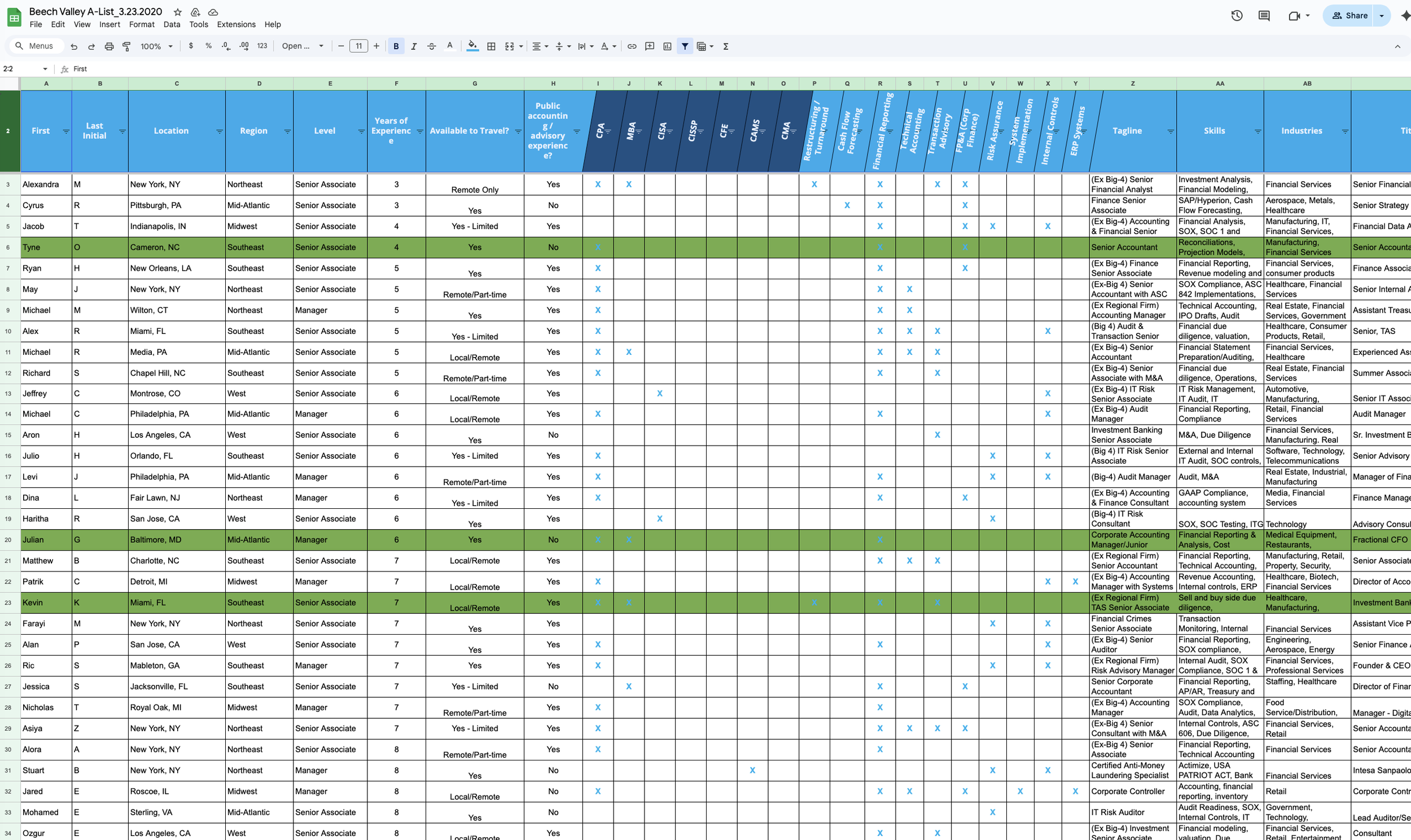
Beech Valley is a boutique staffing firm specializing in connecting highly skilled finance professionals with contract work. Their growth was hindered by manual, repetitive workflows — from tracking candidate availability in spreadsheets to emailing updates back and forth with clients.
These inefficiencies caused delays in placements, introduced errors in candidate data, and created frustration for both staff and clients. The challenge: design internal tools to modernize operations without disrupting ongoing business.
2. My Role
As Principal Product Designer, I owned the end-to-end product lifecycle, responsible for:
Conducting discovery research into internal operational workflows and pain points
Translating findings into product strategy, requirements, and user stories in collaboration with business owners
Designing, prototyping, and refining internal applications with the engineering team
Validating concepts and releases with the end users — the staffing team
3. Research & Discovery
Methods used:
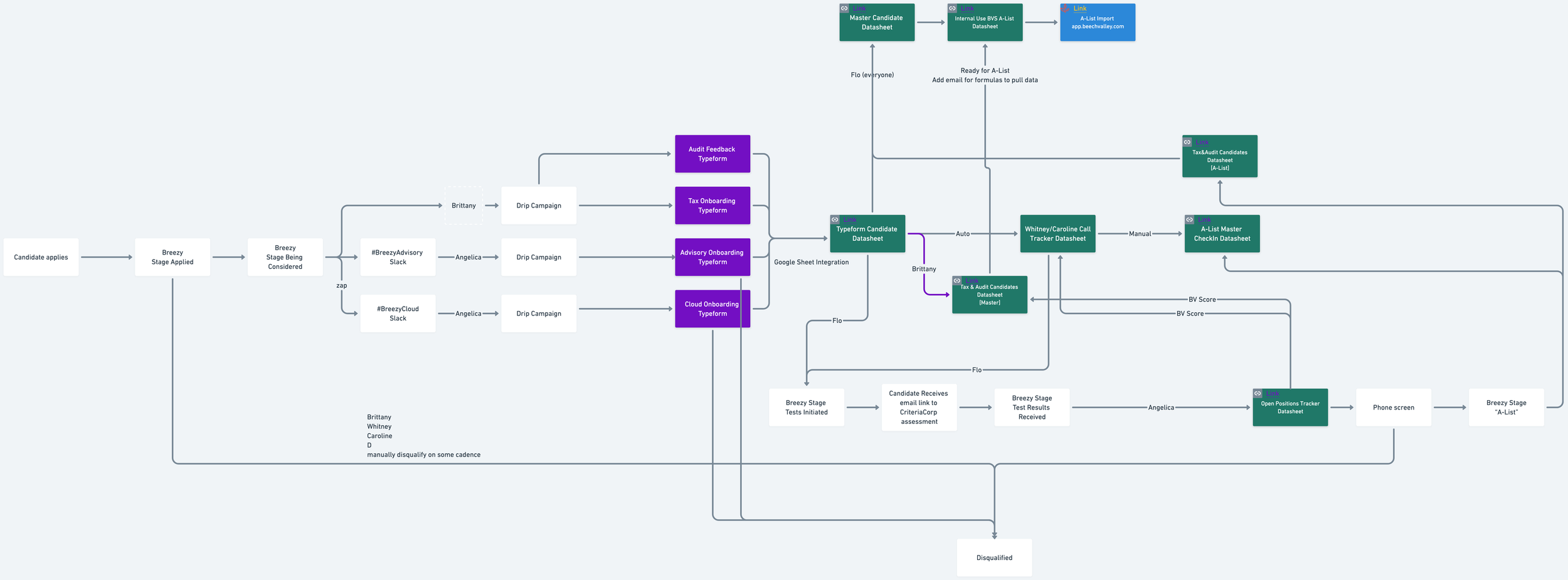
Workflow Audits: Shadowed recruiters and coordinators through their daily tasks
Stakeholder Interviews: Gathered input from leadership on business priorities, technical constraints, and roadmap goals
Pain Point Mapping: Created a visual map of bottlenecks and repetitive steps
Task Time Tracking: Measured baseline times for key activities to track improvement post-launch
Key insights:
Recruiters were spending 30–40% of their time on data entry and manual communication updates
Multiple, inconsistent spreadsheets caused version control problems
Candidate availability was often outdated, causing missed opportunities
4. Design & Iteration
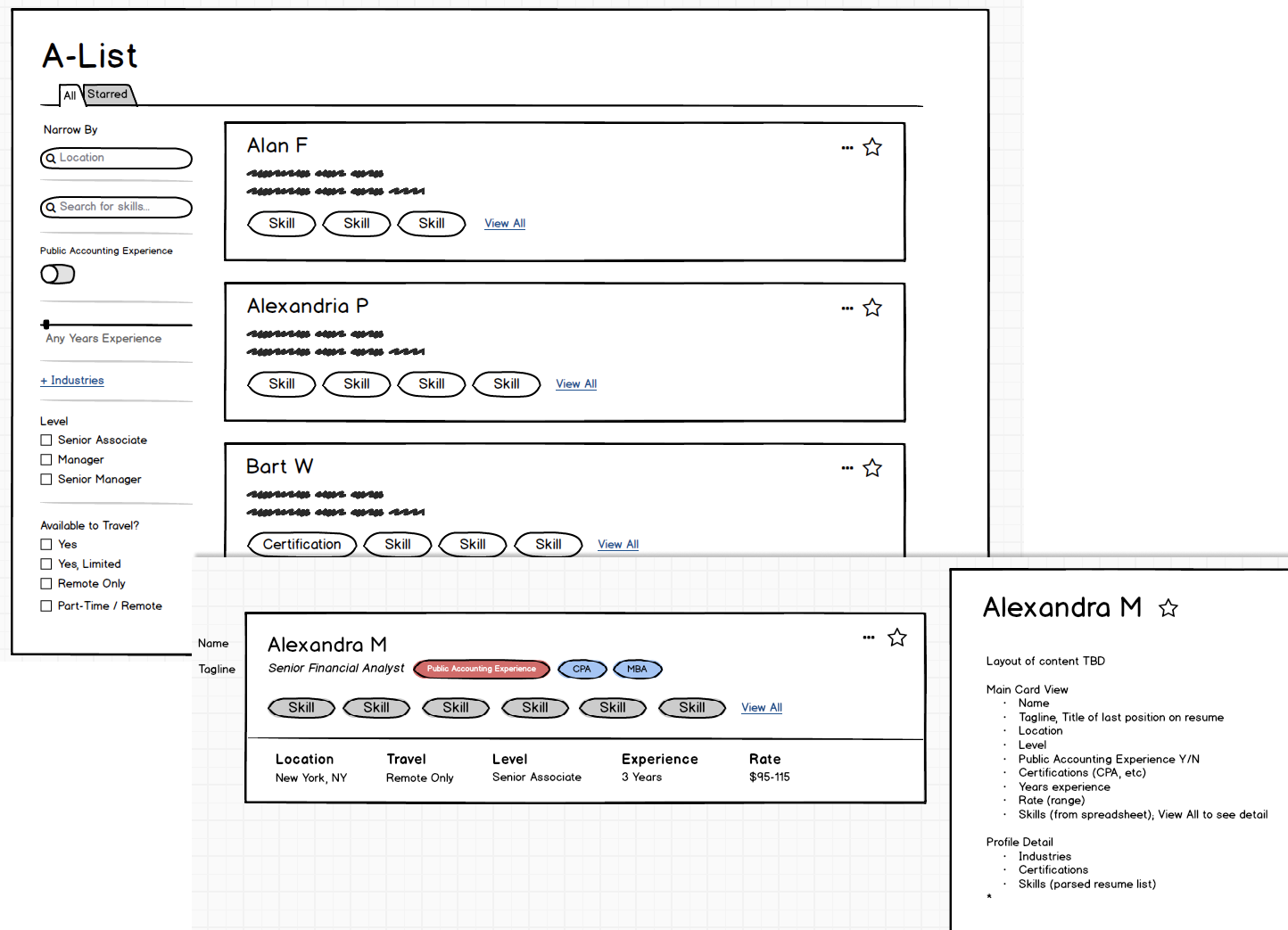
Created low-fidelity workflow diagrams to visualize the redesigned process and align cross-functional stakeholders
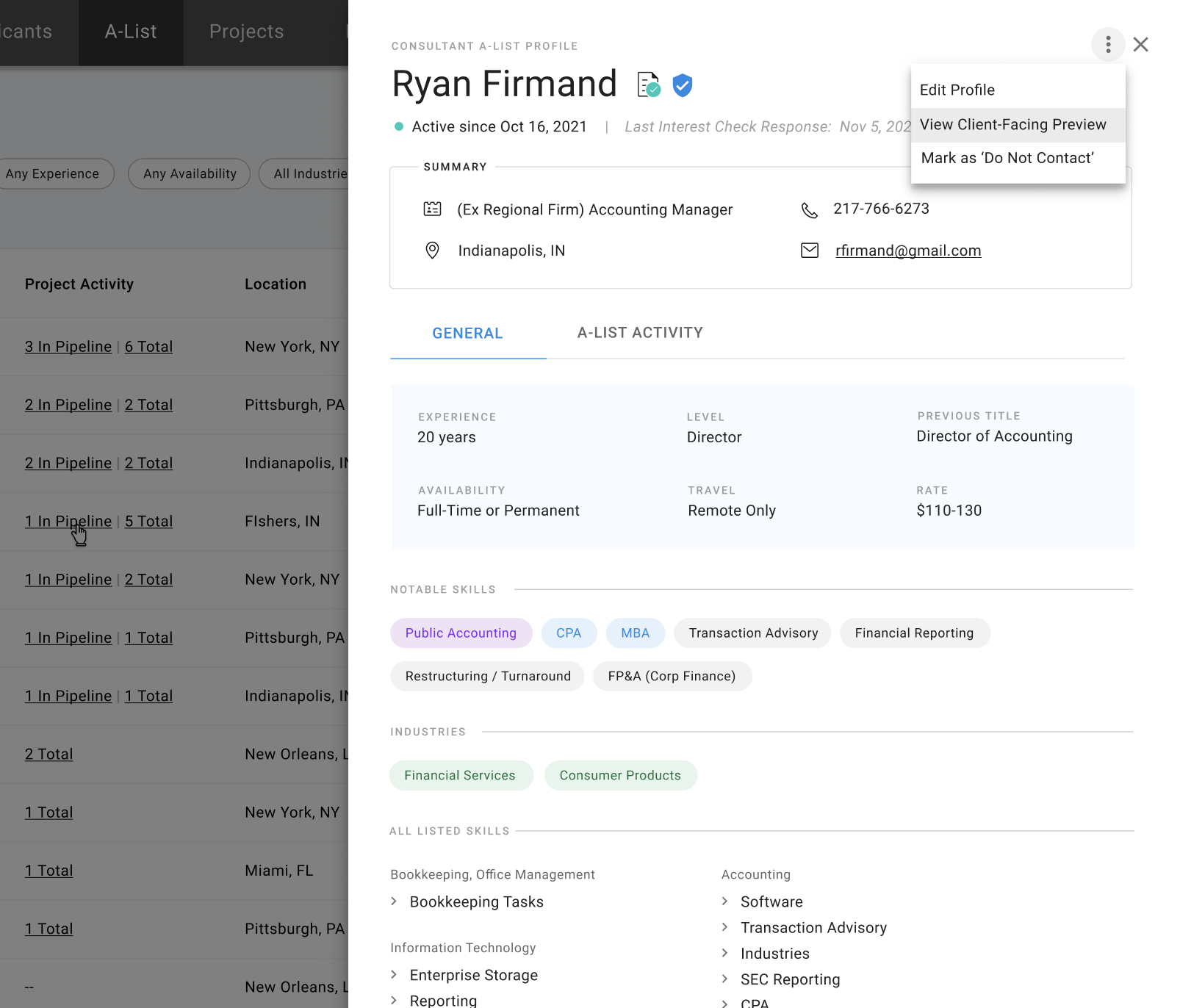
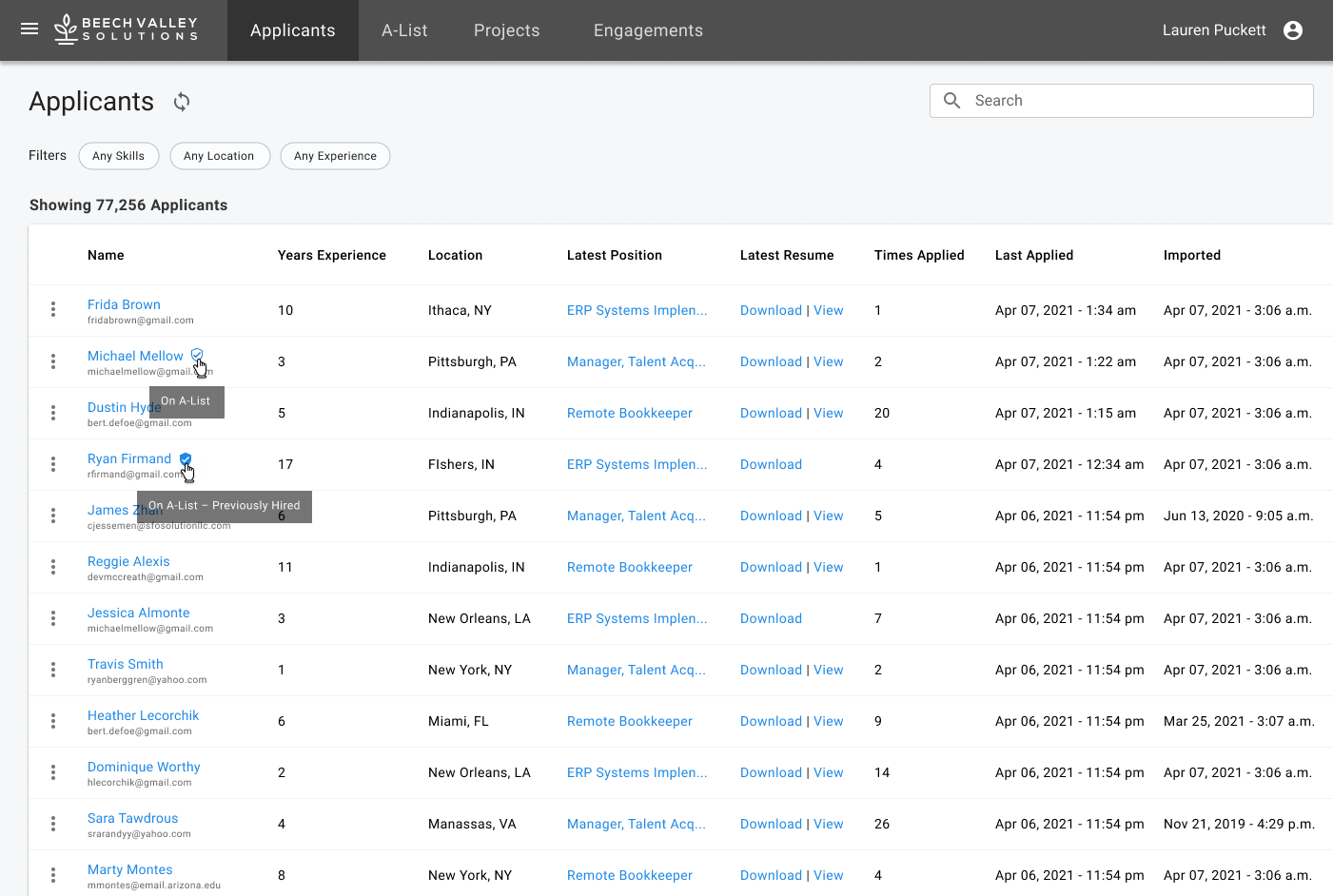
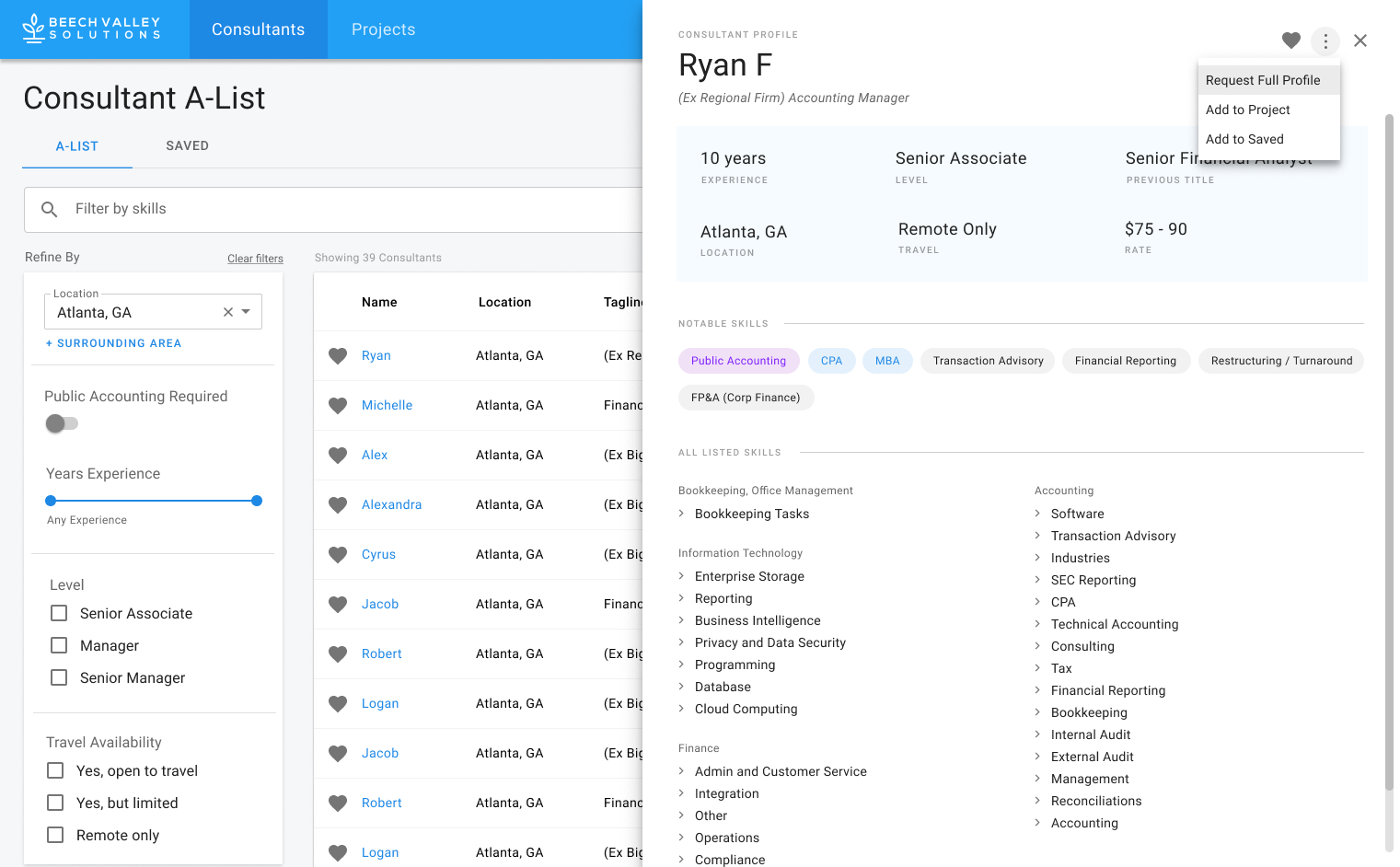
Designed searchable candidate profiles with real-time availability updates
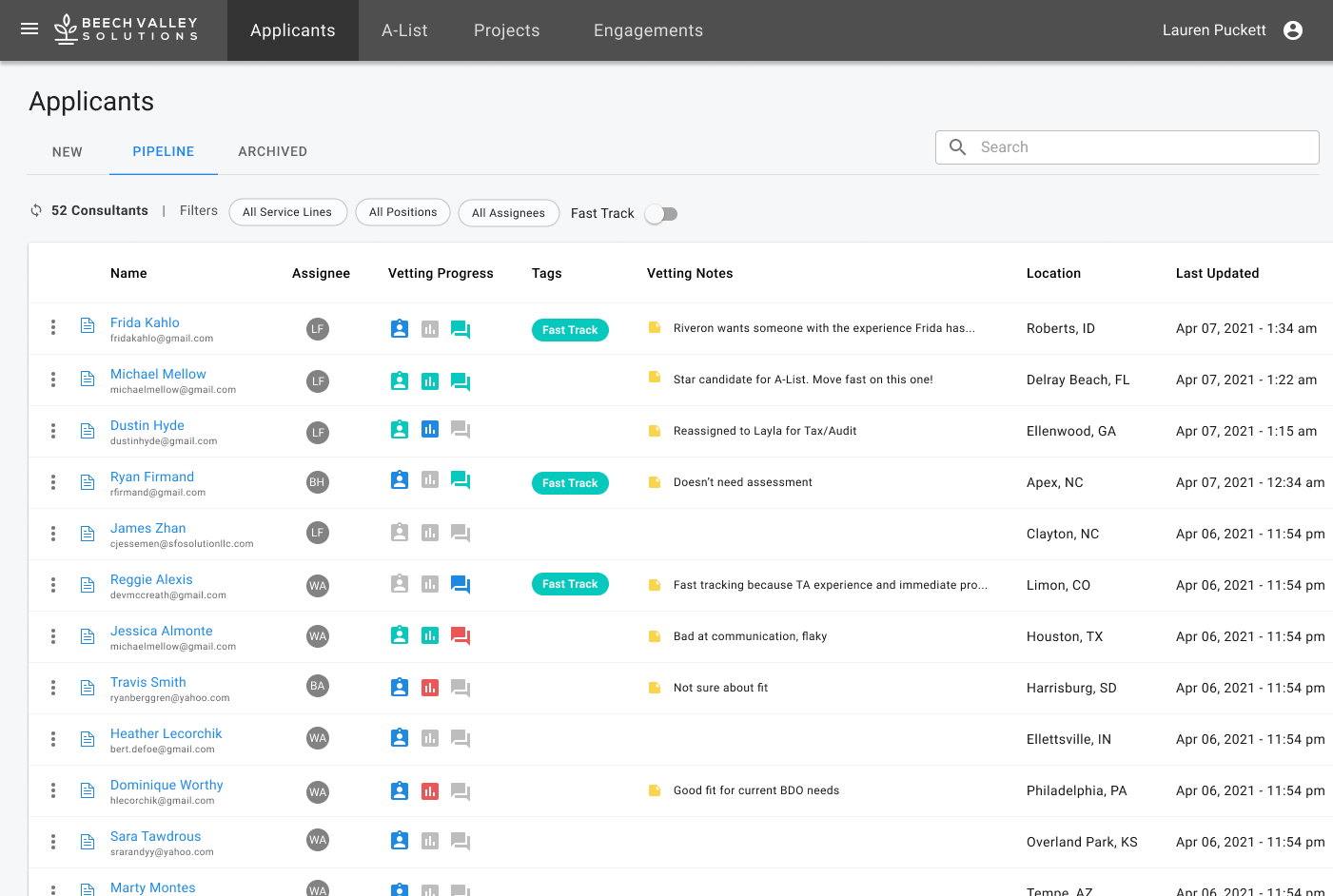
Built integrated task dashboards that reduced context-switching and streamlined daily operations
Introduced automation for repetitive notifications and follow-ups
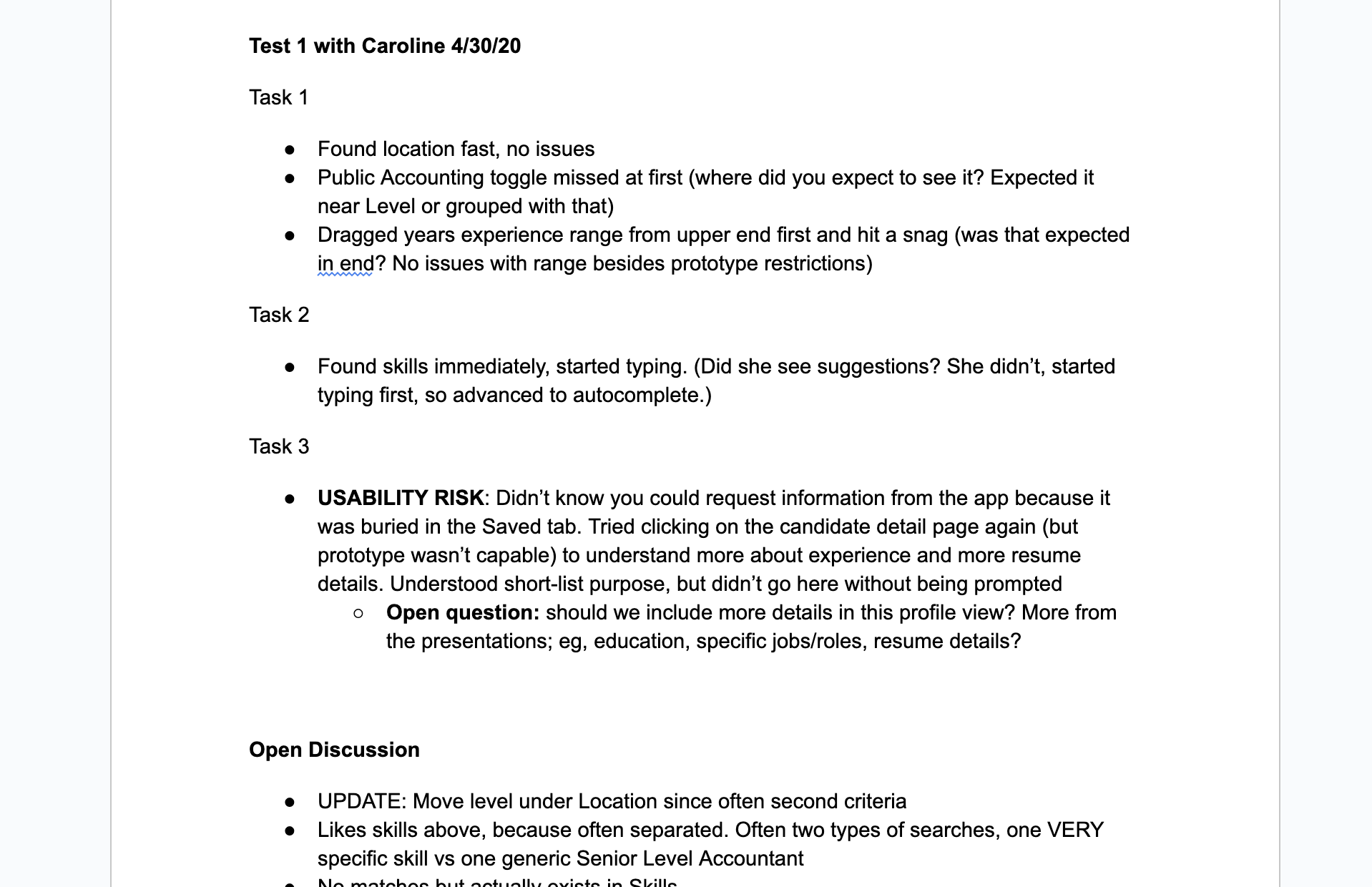
Conducted usability testing on prototypes to refine flows and prioritize requirements before development
5. Outcomes & Impact
Reduced candidate profile update time by ~50%
Improved data accuracy, reducing double-booking and missed placements
Freed recruiters to spend more time on relationship-building with candidates and clients
Created a foundation for future feature expansion without re-architecting the core system
6. Reflection & Relevance
This project reinforced how targeted process improvements — through direct observation and iterative design — can significantly improve efficiency in complex workflows. The execution model I used here mirrors the exact approach I bring to complex B2B and enterprise environments: understanding the human side of operations, partnering closely with engineering to navigate technical constraints, and managing the end-to-end lifecycle to deliver solutions that make daily work smoother and more effective.